
Carbon in soil can become a long-term asset.
Biochar connects agricultural-residue management, soil improvement and a potential pathway for durable biogenic carbon storage.
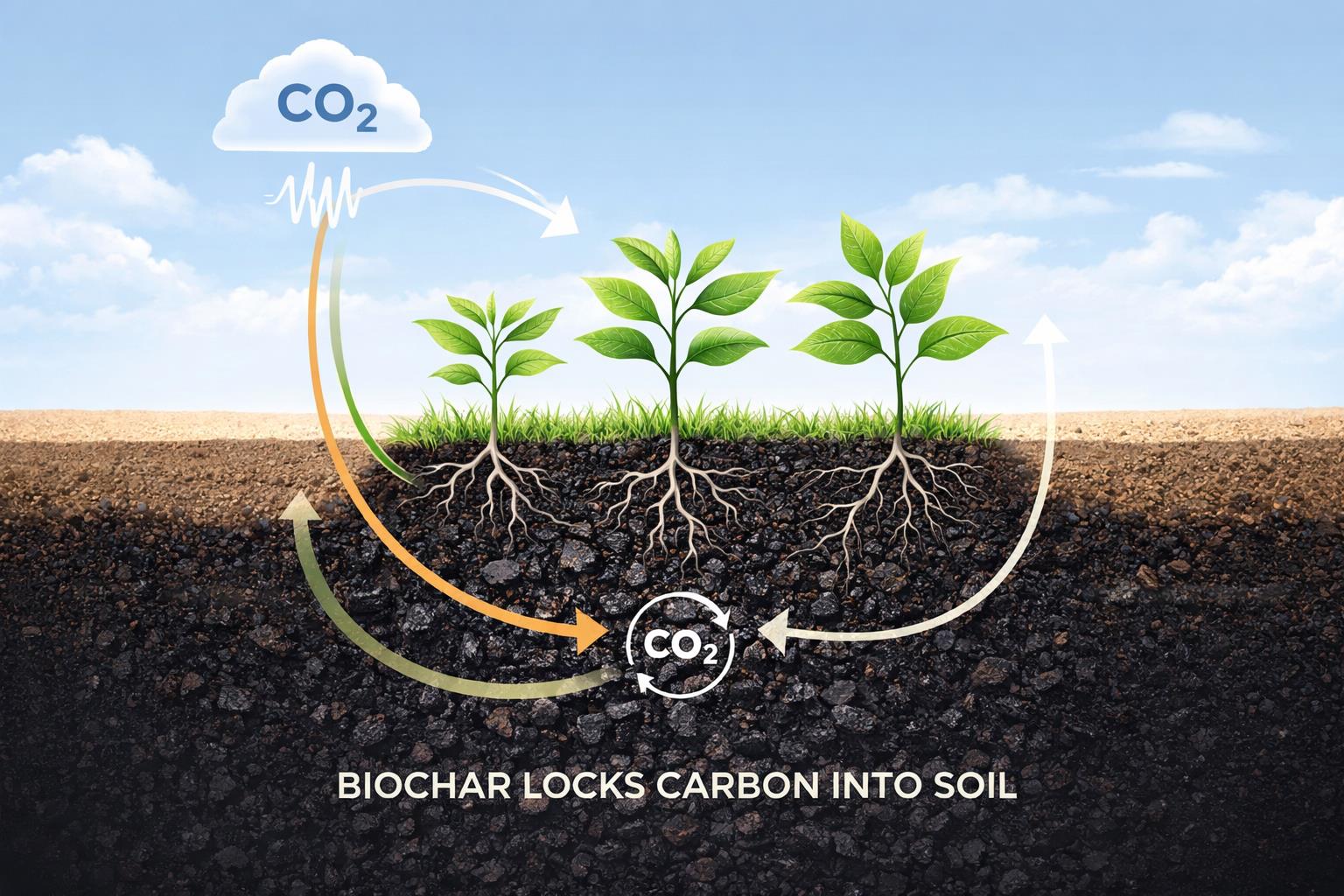
Convert part of biogenic carbon into a more persistent form.
During pyrolysis, biomass is converted into biochar rather than allowing all of its carbon to return quickly to the atmosphere. When produced and applied appropriately, a portion of that carbon can remain in soil over long time horizons.
We do not present unverified carbon credits as issued.
Credible carbon projects require defined project boundaries, feedstock and energy data, life-cycle accounting, monitoring, traceability, an accepted methodology and independent verification.
Traceability
Build feedstock, production, batch and product-use records.
Measurement
Collect carbon, energy and co-product data in an auditable form.
Verification
Any credit issuance requires independent verification and an appropriate methodology.